Buffalo's freeze-thaw cycles and lake-effect snow create a real challenge for asphalt surfaces. In our experience, the biggest mistake is assuming a standard section from a warmer climate will hold up here. The subgrade in Erie County often consists of glacial till over clay, which changes volume with moisture. A proper flexible pavement design must account for that. Before we even talk about asphalt thickness, we run a full subgrade investigation. That usually includes a CBR test to estimate the soil's California Bearing Ratio and a plate load test to measure the modulus of subgrade reaction. Those numbers drive the entire pavement structure.
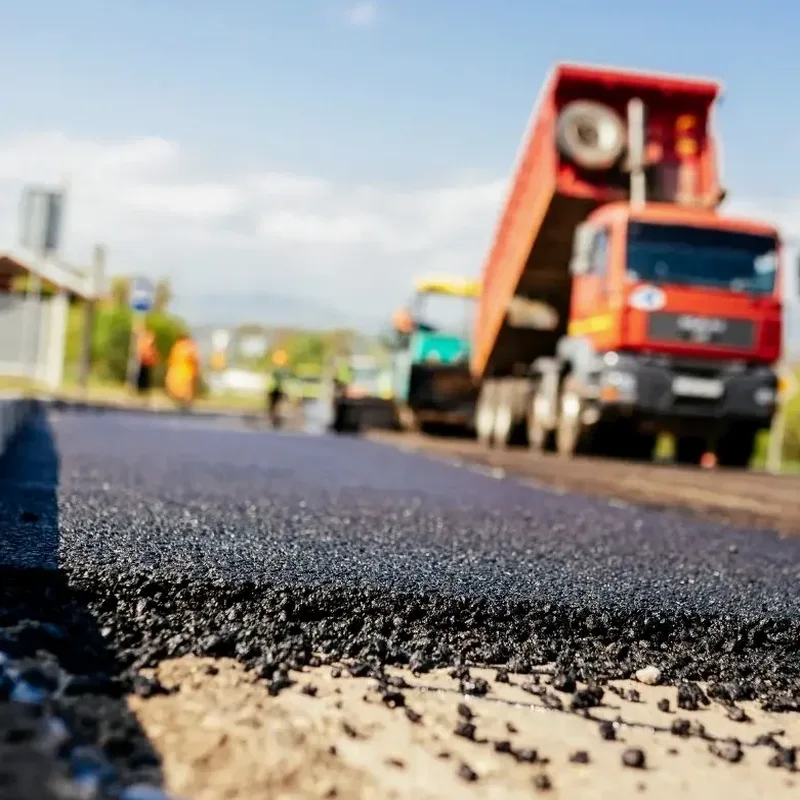
Our team sees subgrade CBR values in Buffalo ranging from 2 to 6. That low strength drives the need for thicker granular layers than many engineers expect.
Method and coverage
Regional considerations
The biggest risk for flexible pavement in Buffalo is frost heave followed by spring thaw weakening. Glacial till soils in this area are highly frost-susceptible. When the ground freezes, ice lenses form and lift the pavement. Come spring, the thawed subgrade loses all support. That's when you see alligator cracking and potholes. If the drainage layer is undersized or the base course is too thin, water gets trapped and accelerates the damage. Our design always includes a minimum 12-inch frost protection layer and a sloped subgrade to direct water toward edge drains. We also check the groundwater table depth during field investigation. High water tables in low-lying areas of Buffalo make drainage design critical.
Process video
Standards that apply
AASHTO Guide for Design of Pavement Structures (1993), NYSDOT Highway Design Manual Chapter 6, ASTM D1883 (CBR), ASTM D1194 (Plate Load Test), ASTM D698 (Standard Proctor)
Complementary services
Subgrade Evaluation & CBR Testing
We excavate test pits at the project site to classify soils and run CBR tests on undisturbed and remolded samples. This gives us the design subgrade strength for the pavement section.
Structural Layer Design
Using AASHTO 1993 methodology, we calculate the required thickness of asphalt, base, and subbase layers based on traffic load data, subgrade modulus, and environmental factors specific to Buffalo.
Drainage & Frost Protection Design
We design edge drains, underdrains, and frost protection layers to prevent moisture accumulation and frost heave. This includes specifying geotextiles and granular materials that meet NYSDOT gradation requirements.
Typical parameters
FAQ
How does Buffalo's frost depth affect flexible pavement design?
Buffalo's frost depth typically reaches 40 to 44 inches. That means the pavement section must include a non-frost-susceptible base that extends below that depth, or the subgrade must be treated to reduce heave. We usually specify a granular frost protection layer of at least 12 inches, and we design the total pavement structure to keep the frost line from penetrating the natural subgrade.
What CBR value do you typically use for subgrade design in Buffalo?
For most residential and commercial projects in Buffalo, we see CBR values between 2 and 6 for the native glacial till and clay soils. We always run field and lab CBR tests at natural moisture content. If the value falls below 3, we recommend subgrade treatment, such as lime stabilization or a thicker granular base, to bring the effective strength up before placing asphalt.
Can you design a flexible pavement for a parking lot with heavy truck traffic?
Yes. We classify the traffic by the number of 18-kip equivalent single axle loads (ESALs) over the design period. For a truck-heavy parking lot, we may design a 5-inch asphalt section over 10 inches of base. We also account for channelized traffic and turning movements, which concentrate loads along specific paths. Our design includes a thicker asphalt layer and a high-quality base course to resist rutting.
Do you provide construction inspection during asphalt placement?
Yes. We offer quality assurance testing during construction, including density testing of the base course and asphalt core sampling. We verify that the contractor meets the specified compaction and thickness. We also check the final surface for grade and cross-slope. This ensures the pavement performs as designed under Buffalo's traffic and weather conditions.
How much does a flexible pavement design study cost in Buffalo?
For a typical two-lane road or medium-sized parking lot, the cost for subgrade testing and structural design ranges between US$1.680 and US$4.500. This includes field investigation, lab testing, and a final report with layer thicknesses and material specifications. Larger projects or those requiring multiple test pits and traffic analysis may fall at the higher end of that range.