A multi-story residential project near the Buffalo River encountered unexpected glacial till layers that standard borings missed. Seismic tomography (refraction/reflection) was deployed to map the complex stratigraphy across the site without mobilizing multiple drill rigs. The survey defined the bedrock surface at depths between 18 and 35 ft, allowing the structural team to optimize foundation depths. For projects where lateral variability is a concern, combining seismic tomography with a pavement flexible design or a triaxial test on recovered samples provides both geophysical and mechanical property constraints.
Vₛ₃₀ values from seismic tomography directly govern ASCE 7 site class assignments, affecting both design spectra and foundation costs.
Method and coverage
- P-wave and S-wave velocity profiling to 30+ m depth
- ASTM D4428 compliant field procedure
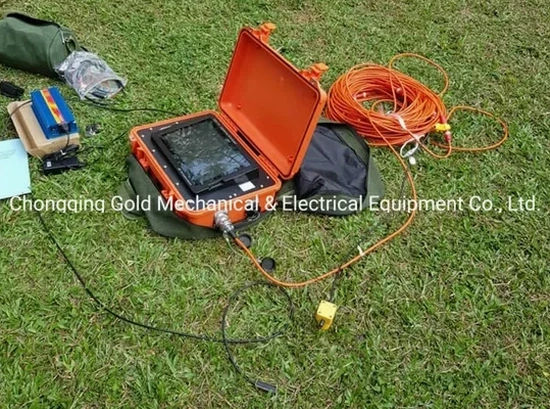
- Real-time data QC with 24-channel seismograph
- Integration with borehole geophysics for calibration
Regional considerations
ASCE 7-22 mandates site-specific ground motion parameters for Seismic Design Categories D, E, and F, which cover much of the Buffalo area under the IBC 2024 update. Relying on generic Vs30 maps from USGS can overestimate or underestimate the actual site response by up to 40%. Seismic tomography (refraction/reflection) mitigates this risk by providing site-specific velocity profiles that reduce uncertainty in design spectra. This is particularly critical for buildings exceeding six stories or structures founded on soft compressible soils near the lake plain.
Process video
This service complements our laboratory testing work for a complete project analysis.
Standards that apply
ASCE 7-22 (Minimum Design Loads for Buildings and Other Structures), IBC 2024 (International Building Code, Chapter 16), ASTM D4428/D4428M-14 (Crosshole Seismic Testing), ASTM D5777-18 (Standard Guide for Using the Seismic Refraction Method for Subsurface Investigation)
Complementary services
2D Refraction Tomography
Multi-channel surface array for mapping bedrock topography and detecting buried channels. Typical spreads of 48 geophones with 3-5 m spacing. Delivers P-wave velocity sections with RMS misfit below 5 ms.
MASW for Shear-Wave Velocity
Multichannel Analysis of Surface Waves (MASW) to generate Vs profiles and Vₛ₃₀ values. Adheres to ASTM D4428 and provides site class data for ASCE 7 compliance. Useful for liquefaction triggering analysis using the Youd-Idriss 2001 method.
Reflection Tomography for Deep Targets
High-resolution reflection profiling for depths exceeding 50 m, applicable to tunnel alignment studies and deep foundation design. Uses vibroseis or accelerated weight drop sources with 1-2 m receiver spacing.
Typical parameters
FAQ
How does seismic tomography differ from standard borings?
Standard borings provide point data with 100% recovery but limited lateral coverage. Seismic tomography (refraction/reflection) produces continuous velocity profiles across a site, revealing soil/rock interfaces and lateral variability that a single boring might miss. The two methods are complementary: borings calibrate the velocity model, and tomography fills the gaps between holes.
What is the typical cost range for a seismic tomography survey in Buffalo?
For a standard residential or commercial site survey covering 2-4 lines with 24-48 geophones each, the cost ranges between US$2,470 and US$5,580. This includes field acquisition, data processing, and a final interpreted report with velocity sections and Vₛ₃₀ values. Larger projects with multiple arrays or 3D coverage fall at the upper end of that range.
When should I use refraction versus reflection tomography?
Refraction tomography is preferred for shallow investigations (down to 30-50 m) where first-arrival P-waves are clear and the target is a velocity contrast of at least 20%. Reflection tomography excels at greater depths (50-200 m) or where dipping interfaces and complex structures require imaging of reflected arrivals. In Buffalo, refraction is typically used for foundation investigations, while reflection is reserved for deep tunnel or bridge pier studies.