The combination of Lake Erie’s fluctuating water levels and Buffalo’s legacy of glaciolacustrine clays creates a tough environment for any retaining structure. Our team has designed sheet pile walls for waterfront bulkheads, bridge abutments, and deep excavations along the Niagara Frontier. The soils here—silty clays with occasional sand lenses—require careful evaluation of lateral earth pressures, seepage gradients, and corrosion potential for steel piles. We integrate local boring data with the latest IBC 2021 and ASCE 7-22 load combinations. Before finalizing a sheet pile wall layout, we often run a permeability field test to measure hydraulic conductivity in the lacustrine deposits, which directly drives the drainage design behind the wall.
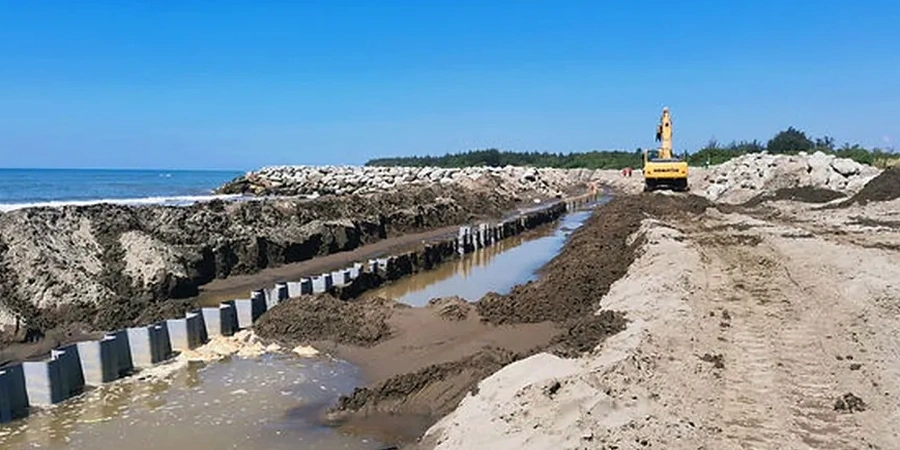
Sheet pile wall design for Buffalo’s lacustrine clays demands more than a standard cantilever model—passive resistance is often the limiting factor.
Method and coverage
- Soil stratification based on SPT borings (ASTM D1586) and continuous sampling
- Seepage analysis using flow nets for anchored bulkheads
- Structural design of interlock stresses and toe embedment
Regional considerations
Lake Erie’s water level has risen over 0.6 m in the past decade according to NOAA records, directly increasing the hydrostatic load on sheet pile walls along Buffalo’s waterfront. Combine that with the city’s 228 freeze-thaw cycles per year, and you get ice jacking forces that can buckle an undersized wall. Our sheet pile wall design in Buffalo includes a load case for ice pressure (per USACE) and a drainage system that prevents ice lenses from forming behind the wall. We also evaluate the risk of scour at the toe from wave action during lake storms—a factor many generic designs ignore.
Standards that apply
IBC 2021 (Section 1806 – Foundation Walls, Retaining Walls), ASCE 7-22 (Chapter 3 – Ice Loads, Chapter 15 – Soil Lateral Pressures), USACE EM 1110-2-2504 (Sheet Pile Wall Design), ASTM D1586-18 (Standard Penetration Test)
Complementary services
Cantilever Sheet Pile Wall Design
For walls up to 6 m high in Buffalo’s clay soils, we compute passive resistance using the log‑spiral method and verify toe embedment against rotational failure. Includes seepage analysis and uplift checks.
Anchored Sheet Pile Wall Design
For deeper excavations (6–12 m) near the Buffalo River or downtown, we design single or multi‑tier anchor systems with deadmen or ground anchors. We calculate anchor loads from active earth and water pressures using the tributary area method.
Cofferdam & Temporary Wall Design
For bridge pier repairs or utility shaft construction in Buffalo, we design cellular or straight‑web sheet pile cofferdams. We include dewatering analysis and structural checks for interlock stresses during driving.
Typical parameters
FAQ
What is the typical cost range for a sheet pile wall design in Buffalo?
Our design fee for a sheet pile wall in Buffalo typically ranges between US$1.640 and US$5.450, depending on wall height, soil complexity, and whether anchors are required. This includes site‑specific soil analysis, structural calculations, and a construction plan.
How does the freeze-thaw cycle in Buffalo affect sheet pile wall design?
Buffalo experiences about 228 freeze‑thaw cycles annually. We model ice jacking forces as lateral surcharges per ASCE 7-22, and we specify a gravel drainage blanket behind the wall to prevent ice lens formation. For walls in contact with Lake Erie, we also check for ice adhesion on steel sections.
Can you design a sheet pile wall for a site with soft lacustrine clay near the Buffalo River?
Yes. In Buffalo’s soft clay deposits, we rely on undrained shear strength from lab triaxial tests and use the total‑stress method for stability. We often recommend a longer toe embedment or a tied‑back system to compensate for low passive resistance. Our designs comply with USACE EM 1110-2-2504.