Geotechnical investigation in Buffalo forms the critical first step in any construction or infrastructure project, providing the data necessary to design safe and economical foundations. This category encompasses the systematic study of subsurface soil, rock, and groundwater conditions through a combination of field exploration, in-situ testing, and laboratory analysis. In a city with Buffalo's industrial legacy and diverse geological history, understanding what lies beneath the surface is not merely a regulatory checkbox—it is a fundamental engineering necessity. From the redevelopment of historic waterfront properties to the construction of new energy facilities, thorough site investigation mitigates the risk of structural failure, unexpected delays, and costly overruns. The process directly informs decisions on foundation type, earthwork specifications, and environmental management, making it indispensable for architects, civil engineers, and property developers operating across Western New York.
Buffalo's subsurface conditions present a unique set of challenges that demand a rigorous investigative approach. The city sits atop a complex sequence of glacial deposits left by the retreat of the Wisconsin ice sheet, resulting in highly variable stratigraphy. Near the surface, engineers frequently encounter stiff glacial till composed of a dense mixture of clay, silt, sand, and cobbles, which can provide excellent bearing capacity but is notoriously difficult to excavate. Beneath this till, or in former lakebed plains, lie pockets of softer, compressible glaciolacustrine silts and clays prone to long-term consolidation settlement. The Onondaga Escarpment, running through the city, exposes limestone bedrock, but the depth to competent rock can vary dramatically over short distances, often with weathered and fractured upper zones. High groundwater tables near Lake Erie and the Buffalo River further complicate excavations and foundation design, requiring careful evaluation of dewatering requirements and buoyancy forces.
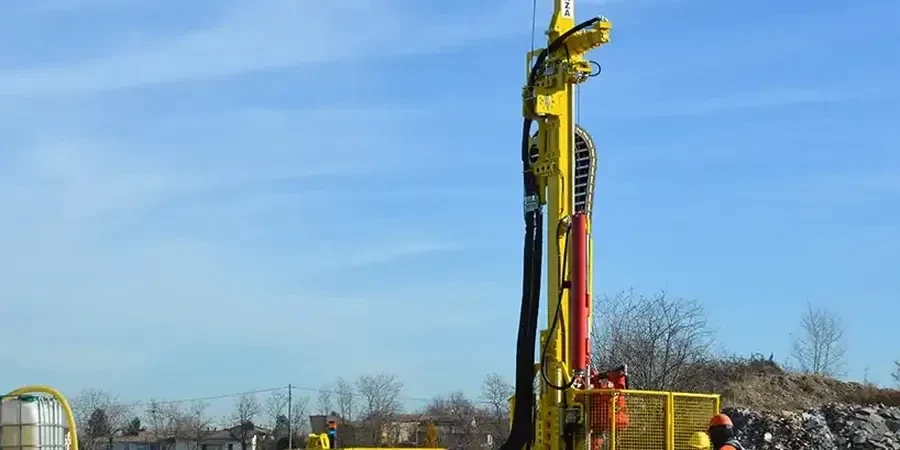
Regulatory compliance in Buffalo is governed by the New York State Building Code, which adopts and amends the International Building Code (IBC). Chapter 18 of the IBC mandates a geotechnical investigation for all structures, with the scope scaled to the project's risk category and the known variability of local soils. The code specifies minimum requirements for borings, sampling, and reporting, and it references ASTM International standards for test methods. A cornerstone of any compliant investigation in the region is the Standard Penetration Test (SPT), which provides both a disturbed soil sample and an empirical measure of soil density and strength. The resulting N-values are correlated with allowable bearing capacities and are essential for liquefaction analysis in seismic design, as Buffalo falls within a region of moderate seismic hazard. Reports must be sealed by a licensed Professional Engineer in New York State and typically include recommendations for foundation design, lateral earth pressures, and pavement sections.
The requirement for a comprehensive geotechnical investigation spans a wide spectrum of project types in the Buffalo area. Municipal infrastructure projects, such as the Buffalo Sewer Authority's stormwater and sanitary system upgrades, rely on subsurface data to design deep excavations and assess soil corrosivity. Commercial developments, including the adaptive reuse of historic structures like the Richardson Olmsted Campus, require detailed analysis of existing foundations and the load-bearing capacity of the underlying glacial till. Renewable energy projects, particularly the installation of large-scale solar arrays and wind turbines in the surrounding counties, depend on Standard Penetration Test data to design spread footings or driven piles that resist overturning moments. Even residential additions and retaining walls on the sloping lots near Delaware Park can trigger the need for a site-specific investigation to address slope stability and drainage. In every case, the investigation serves as the factual basis upon which structural safety and long-term performance are assured.
Available services
Common questions
What is the purpose of a geotechnical investigation?
A geotechnical investigation determines the physical, mechanical, and chemical properties of subsurface soil and rock at a project site. This information is used to design safe and economical foundations, assess slope stability, plan excavations, and identify potential geologic hazards. It provides the essential data required to satisfy building code requirements and prevent structural distress or failure.
When is a geotechnical investigation required in Buffalo?
Under the New York State Building Code, a geotechnical investigation is mandated for nearly all new buildings and major additions. The scope is determined by the structure's risk category and the known complexity of local soils. Any project requiring a building permit in Buffalo, from a single-family home to a high-rise, will typically need a subsurface exploration report sealed by a licensed Professional Engineer.
How deep do geotechnical borings typically go?
Boring depth is not fixed; it is determined by the anticipated loads and the subsurface conditions. Borings must extend through all compressible strata and sufficiently deep into competent bearing material to assess its thickness. In Buffalo's glacial soils, this often means penetrating dense till to a depth of 15 to 30 feet, or deeper if bedrock is shallow and will be used for load-bearing support.
What factors influence the cost of a geotechnical investigation?
The total cost is driven by the number and depth of borings, the accessibility of the site for drilling equipment, the types of laboratory tests required, and the complexity of the final engineering report. Projects with difficult access, the need for specialized testing like piezocone penetration, or deep bedrock investigations will require a larger budget than a straightforward residential lot evaluation.