Buffalo sits on a complex mix of glacial till, lacustrine clay, and silt deposited by Lake Erie and the retreating ice sheets. Many local builders assume the soil is uniform, but we regularly find stiff clay crusts overlying softer lacustrine layers near the waterfront. A shallow foundation design that works in Amherst can be inadequate in the Old First Ward due to those soft lake-bottom deposits. That is why we always start with a study of the soil profile before recommending footing dimensions. Our team runs the lab tests that give engineers the numbers they need — unit weight, shear strength, consolidation curves — so the design matches what is actually underground.
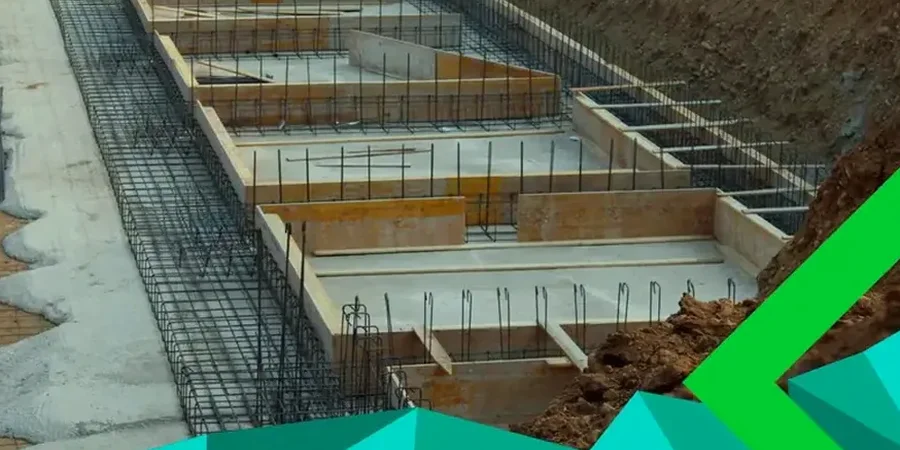
In Buffalo, the lacustrine clay crust can look strong but hides high compressibility — consolidation testing is essential before placing footings.
Method and coverage
Regional considerations
The difference between a footing on the glacial till of the Heights versus a footing on the lacustrine clay near the Buffalo River can be night and day. In the latter, we have seen bearing failures where the clay softened after a wet spring, sinking a corner of the slab. That is why our shallow foundation design explicitly accounts for seasonal moisture changes and the potential for clay softening. We also flag areas with high groundwater — common along the Scajaquada Creek corridor — where footings need drainage to prevent long-term settlement. Getting the parameters right upfront avoids costly retrofits later.
Standards that apply
IBC 2021 — Chapter 18 (Soils and Foundations), ASCE 7-22 — Minimum Design Loads (includes frost and seismic), ASTM D1586-18 — Standard Penetration Test (SPT), ASTM D2435 — One-Dimensional Consolidation Properties, ASTM D3080 — Direct Shear Test of Soils
Complementary services
Bearing Capacity & Settlement Analysis
We run consolidation, direct shear, and index tests on undisturbed samples from test pits or borings. The output includes allowable bearing capacity, estimated total and differential settlement, and modulus of subgrade reaction — all calibrated to Buffalo soil conditions.
Frost Depth Verification & Groundwater Monitoring
For shallow foundations, frost depth is critical. We install temporary piezometers and check soil freezing characteristics per IBC requirements. This service ensures your footings are placed below the frost line and that groundwater fluctuations are accounted for in the design.
Typical parameters
FAQ
What typical soil conditions affect shallow foundation design in Buffalo?
Most of Buffalo has a stiff lacustrine clay crust over softer clay or silt layers, with glacial till present in elevated areas. The clay can be overconsolidated near the surface but compressible deeper down. Groundwater is often shallow near Lake Erie and the Buffalo River, so drainage and footing depth are critical.
How much does a shallow foundation design study cost in Buffalo?
For a typical residential or light commercial project, the geotechnical investigation and lab testing for shallow foundation design ranges between US$2,130 and US$3,570. The final cost depends on the number of borings, testing scope, and site accessibility. Contact us for a project-specific quote.
What are the main risks if shallow foundation design is done without proper soil testing?
The biggest risk is differential settlement caused by the variable lacustrine clay layer. Without consolidation and shear strength data, footings may be undersized or placed above the frost line, leading to cracking, uneven floors, or structural damage. In Buffalo, the combination of clay compressibility and deep frost makes testing essential.