ASTM D2850 and D4767 guide our consolidated-drained and consolidated-undrained triaxial tests. Buffalo's position on the eastern shore of Lake Erie exposes it to significant freeze-thaw cycles and high water tables. These conditions demand accurate cohesion and friction angle values. We run CU tests with pore pressure measurement for saturated clays found near the waterfront, and CD tests on granular fills under slow loading. Our ISO 17025 accredited lab ensures results you can trust for design. Before sampling, we also coordinate with a geotechnical site characterization to define the best boring locations across your lot.
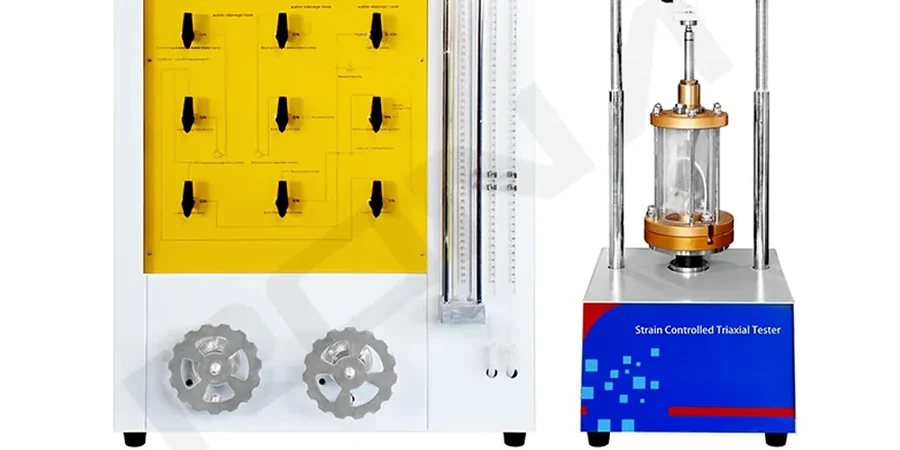
For soft clays in the Outer Harbor, a CU triaxial test with pore pressure measurement is the only reliable way to obtain undrained strength parameters.
Method and coverage
Regional considerations
Buffalo's urban development along the Lake Erie shoreline and the Buffalo River corridor has left a legacy of soft, compressible clays and loose hydraulic fills. These deposits are prone to undrained failure under rapid loading from new buildings or embankments. A triaxial test that neglects pore pressure response can underestimate the risk of bearing capacity failure in these saturated soils. Our CU tests capture exactly that response. We also test samples from proposed excavation depths to assess bottom heave and base stability, a common concern in downtown basements near the water table.
Process video
Standards that apply
ASTM D2850-15 (UU test), ASTM D4767-11 (CU test with pore pressure measurement), ASTM D7181-11 (CD test)
Complementary services
Consolidated-Undrained (CU) Triaxial Test
For saturated clays and silts in the Outer Harbor and Buffalo River floodplain. Includes back-pressure saturation, isotropic consolidation, and shearing at controlled strain rate with pore pressure monitoring. Output: effective stress parameters c' and φ'.
Unconsolidated-Undrained (UU) Triaxial Test
Quick strength check for stiff tills and glacial deposits common in the northern suburbs. No consolidation phase, sheared immediately at 1% / min. Output: undrained shear strength Su for immediate stability analysis.
Typical parameters
FAQ
How many specimens do you need for a CU triaxial test?
A minimum of three specimens from the same sample layer, tested at different confining pressures (typically 0.5, 1.0, and 1.5 times the estimated effective overburden). This produces a reliable Mohr-Coulomb failure envelope.
What is the typical turnaround time for triaxial testing in Buffalo?
Standard turnaround is 3 to 4 weeks for CU tests (including consolidation time). UU tests can be completed in 1 week. Rush service available on request for an additional fee.
Can you test samples from frozen ground?
Yes, but the specimen must be thawed carefully before testing to avoid disturbance. We recommend sampling during warmer months or using insulated core barrels to maintain soil structure. Thawing protocol follows ASTM D6035.
How much does a triaxial test cost?
A standard CU triaxial test (set of three specimens) is in the range of US$1,730 to US$2,540, depending on the number of consolidation stages and pore pressure monitoring requirements. UU tests are lower. Contact us for a detailed quote based on your project scope.